
Blog
Recent posts
Evolution of a Fish Filet
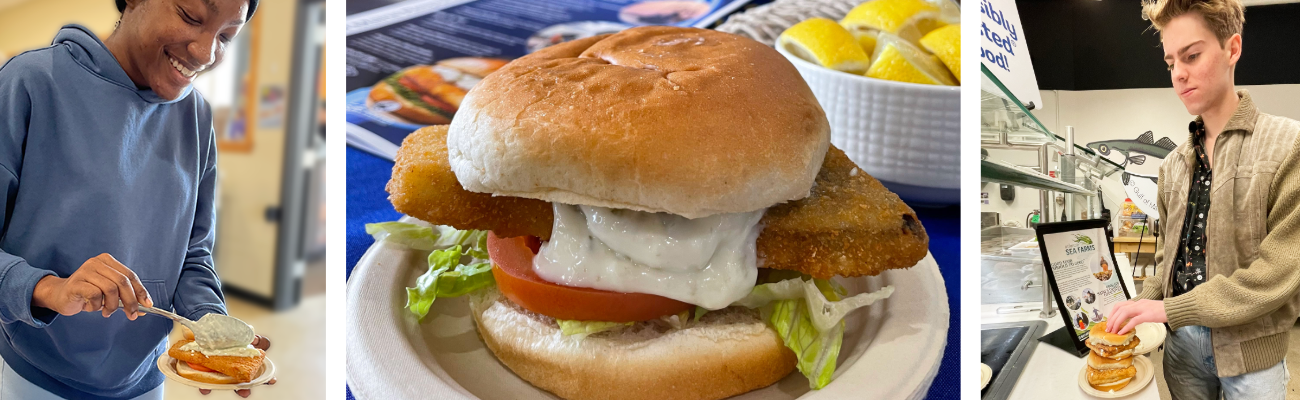
March 2026 - For the team behind the Maine Course Initiative by Sodexo, the idea sounded simple enough: create a breaded fish filet made from responsibly harvested Gulf of Maine fish that students would love. After all, diners already knew and loved the classic fast-food filet-o-fish sandwich. Why not create a Maine-made version for campus dining halls that would support local fisheries while increasing Maine Course's commitment to sourcing local seafood?
Simple idea. A six-year journey.
It all began in June 2015, when Sodexo committed to purchasing 100% Gulf of Maine Research Institute (GMRI)-certified, responsibly harvested fresh white fish by 2020. The goal was successfully achieved on January 1, 2020. Still, Maine Course viewed that milestone as a starting point rather than a finish line. The Director of Maine Course, Maeve McInnis, continued her search for ways to increase the initiative's local seafood spend and support of Maine's fishing communities.
One opportunity seemed obvious: a breaded fish filet. The concept checked every box. It was familiar. Versatile. Student-friendly. It could work in residential dining halls and retail operations, instantly expanding usage across campuses. It could become a fish sandwich one day and fish tacos for Taco Tuesday the next. Most importantly, it had the potential to dramatically increase local seafood purchasing.
But there was one major problem. Nobody was making a Gulf of Maine breaded fish filet. Before the fish filet, Maine Course experimented with a product called Shark Bites, a breaded fish nugget made from dogfish, also known as cape shark. The first version missed the mark with diners. There were recipe changes and improvements in fish handling and processing which significantly improved quality, proving the concept could work. However, a challenge remained: finding a processor willing and capable of creating a custom-breaded fish filet for campus dining.
Part of the challenge came during COVID, when many processors streamlined production and reduced the number of specialty-products they were willing to manufacture. But even before the pandemic, finding the right partner had been difficult. Maine Course needed a processor that understood large-scale foodservice, could work within pricing realities, and believed in the product's mission. Nevertheless, McInnis persisted.
Finally, there was a turning point in McInnis's pursuit of the perfect breaded fish filet. With the help of the Gulf of Maine Research Institute, the Maine Course connected with Channel Fish Processing in Boston, a company already supplying seafood to Slade Gorton, Sodexo's contracted frozen seafood provider. Suddenly, what had felt complicated began to feel achievable. The pieces of the puzzle had begun to fall altogether.
Conversations led to collaboration. Together, Channel Fish, Slade Gorton, and Maine Course worked through every detail: the species of fish, the breading profile, portion size, and how the filet would perform, whether baked or fried in high-volume campus kitchens. Channel Fish understood how to create a product that would be cooked at scale. Slade Gorton understood the price point needed to make the product viable across campuses. Because the companies already worked together, introducing a single additional product into the supply chain was seamless.
This year, the six years of persistence paid off, and the Maine Course local fish filet became a finished product. It is proof that institutional dining can help strengthen regional food systems when the right partnerships come together. Every filet served helps increase Maine Course's local seafood spend, which in turn supports Maine fishermen, processors, and coastal communities.
And perhaps most importantly? The diners love it. What began as an ambitious idea has garnered rave reviews. In the words of students themselves, it's "fire."
Second Annual Battle of the Chefs: Culinary Creativity Takes Center Stage at CMCC's Plant-Based Chef Showdown
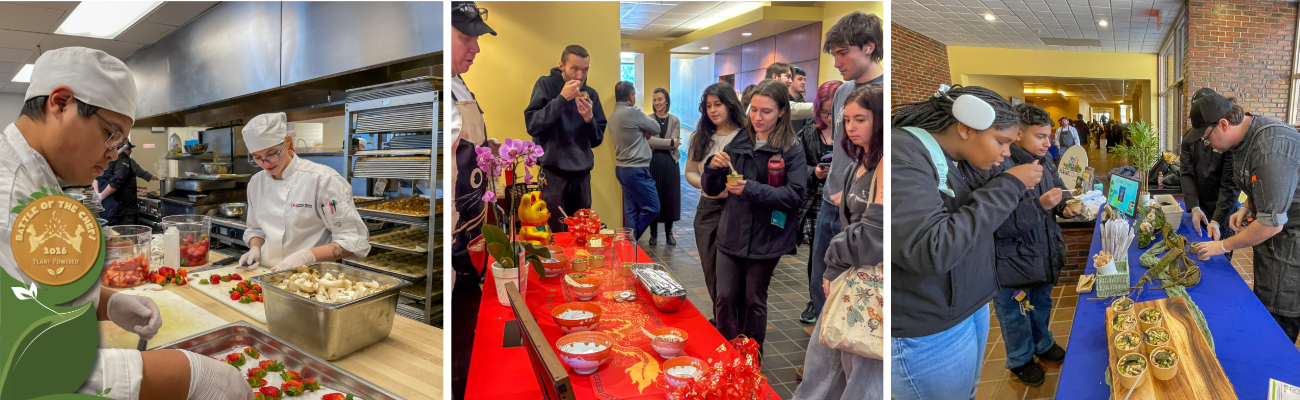
February 5, 2026 - If you walked into Jalbert Hall atCentral Maine Community College(CMCC) at 11 am on February 5th, you’d have been met with the buzz of a high-stakes culinary battle underway, showcasing creativity, collaboration, and culinary excellence. A throng of hungry students, faculty, and community members lined up at the chef’s tables, filling the hall with plant-based culinary delights. Sodexo chefs from colleges and universities from across Maine were battling it out to create the most delicious and inspiring plant-based dishes. Their goal? To take home the winning trophy and bragging rights at the second annual Maine Course Battle of the Chefs.
The day began early for the Chefs and for students enrolled in CMCC’s culinary program. In the kitchen by 6 am, culinary students worked side by side with Sodexo chefs, transforming the teaching kitchen into a real-world experience. Students gained firsthand experience in teamwork, techniques, and creativity required to succeed in the culinary world. The goal wasn’t just to make a plant-based dish, but to prove that plant-based dishes can be delicious and inspiring, the star of the plate.
At 11:00 am, a packed hall turned into a giant focus group tasting an eclectic group of dishes and using tokens to vote for their favorites. Two hours later, the tokens were counted. Crowd favorite? Team Coastal Sprouts’ Hoisin-Glazed Tofu Bao Bun. The victorious Bao Bun stuffed with Gulf of Maine sourced Kelp Kimchee, and pickled vegetables. This winning combination highlights how pairing global flavors with local ingredients can truly resonate with diners. This April, during Earth Week, the winning dish will be served in Sodexo campus dining halls across Maine.
The Maine Course Battle of the Chefs proved that when you mix a little healthy competition with a lot of local flavors, the result is a recipe for success.

Forging Community Impact Through Collaboration and Innovation
November 20, 2024 - In today's increasingly disconnected world, the importance of belonging to a community cannot be overstated. The Maine Course by Sodexo's partnership with the Maine Grain Alliance and Maine Grains' grist mill exemplifies how meaningful collaboration creates far-reaching benefits beyond immediate business relationships.
In 2020, the Maine Course made a five-year commitment with the Maine Grain Alliance to increase its purchases of locally grown grains by 50% and double the number of grain-based recipes in its dining halls. This Commitment was driven by necessity and investment in the Maine grain economy. The Maine Course was investing in a community ecosystem. The Commitment required bringing together farmers, milling infrastructure, and Sodexo chefs in meaningful conversation and listening. True community isn't about transactional relationships but working together to determine mutually beneficial solutions.
The results speak volumes. Sodexo's grain purchases grew from $20,000 in 2020 to $42,000 in 2024, demonstrating the economic impact of community-minded business practices. Sodexo's Senior Area Executive Chef, Wendy Benney, and Chef Doug Winslow collaborated to reformulate existing recipes, developing scratch-made cookie recipes using Maine grains that are now featured daily in dining halls across campuses.
Perhaps most impressive is how this partnership addressed agricultural sustainability challenges. Crop rotation with yellow peas helps rejuvenate soil while creating economic opportunities, but it requires innovation to become applicable. Chef Benney's team developed a yellow pea hummus, now a menu staple, transforming a sustainable farming practice into a viable, high-protein product. Collaboration has been critical in helping to develop achievable economic opportunities to generate income for farmers, which has helped to transform Maine's agricultural community. Potato farmers can now grow potatoes and their rotation crops profitably, providing additional revenue from grains and legumes.
The partnership continues to evolve with Maine Course's latest initiative supporting Somerset County's grist mill, Maine Grains. Recognizing that infrastructure is crucial to community development, Maine Course is committed to being both a buyer and test kitchen to facilitate product development and distribution across 14 Maine campuses. This includes introducing bran flour and championing innovative grain products created with a new extruder that transforms grain by-products into high-fiber, high-protein goods, such as quick breads, muffins, crackers, ready-to-eat cereals, and snack bars. Sodexo's Commitment proved instrumental in helping Maine Grains secure the prestigious $200,000 Kendall Food Vision Prize.
The collaboration will help provide Maine's farmers with additional agricultural and economic opportunities. This approach demonstrates how community partnerships can support local agriculture, encourage regional economic development, and create sustainable food systems.
Maine Course by Sodexo understands that true belonging means making decisions that benefit all stakeholders and contributing to the collective good through meaningful, sustainable partnerships.